

Marvelous Errors
Jokes the Universe Likes to Tell

One thing is certain: the Universe (however you define it) has a sense of humor.
Yes, it’s often extremely dark and edgy — and that’s perhaps when it’s most necessary to laugh.
I experienced a more playful series of jokes this week — three of them, actually — as I contemplated the theme for this month’s meditation.
It all began with a post from September L. Davis, an over-the-top comedic character portrayed by actress and SNL comedian Ana Gasteyer.
September is a parody of a Broadway diva, known for her wild mane of ginger hair, fanatical devotion to her craft, and complete inability to escape backstage drama.
In her own words, she is
“Too talented
to be nice.”
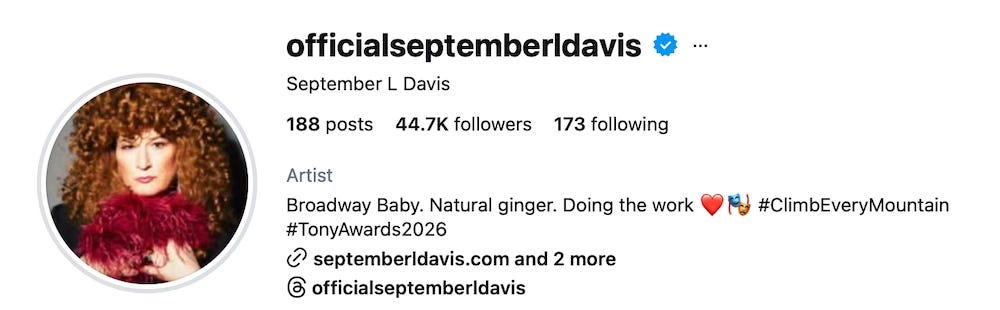
September’s latest project: an (entirely fictional) musical version of Proof, the very serious, Pulitzer Prize-winning play currently being revised on Broadway.
Although I have a different — and far more sincere — attachment to the title, Proof is actually the theme I was contemplating for April.
I wondered for a moment if the concept was perhaps a little too offbeat, but watching September’s fake interviews with real Broadway reporters encouraged me to commit.
You can listen to the new meditation HERE.
(And if you’re the kind of person who finds theater insider jokes funny, you can check out September HERE.)

I’ve been thinking about the concept of proof because it plays into this month’s Transformation Book Club selection.
We’re reading Outsmarting Reality by YouTube sensation Nero Knowledge.
(You can support and join us HERE)
Nero’s an early-20s phenomenon who, in my view, has one of the wisest, most literate, and most comprehensive takes on the entire Law of Attraction universe.
Nero also has a viral YouTube podcast — also on Spotify — where he appears always wearing sunglasses, a durag, and a white sleeveless undershirt.
He and his friend / producer AJ burst into rap verses and debate Marvel characters and anime.
I find Nero’s definition of manifestation quite compelling:
“Manifestation is internally shifting to a degree
to which you’re no longer emotionally dependent upon seeing reality change.”
The whole point is that the shift is entirely inner.
Proof is not only taken out of the equation, but the need for it is the trap that can keep you stuck.

Reasonably content with Proof as a theme, I set out on a hike with Vlad.
Since the day before, I had — as the poet Hafiz says via Daniel Ladinsky — a “mental lawsuit clogging the brain.”
Determined not to squander this rare springtime day, I decided to try an Abraham Hicks technique called the Alphabet Game instead.
You can play it any way you like, but basically you can take a category — a project, a person — and alphabetically list things you appreciate about them.
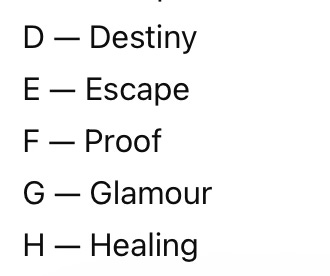
In a moment of whimsy, I asked ChatGPT which adjectives it would pick on my topic.
The list was solid, if predictable, with one notable exception.
For the letter F, it somehow offered the word “Proof.”
A bizarre failure to understand the alphabet — all the other choices were on point — and, even if it was just a data glitch, it felt like another nudge from the universe.
Nero’s point — and I think most metaphysicians would agree — is that:
“Manifestation isn’t about changing reality,
it’s only about changing you.”
He’s not denying that the things we want — and sometimes need — to change in our physical experience are real and important.
It’s just that not only are we looking for proof in the wrong place, but the search itself — like the proverbial watched pot — also blocks the process.
Ironically, the more you seek evidence of reality changing, the more you affirm that you haven’t changed, because if you had, there would be no need to look for proof; the change would already be your experience, which is internal.
Like trying to force yourself to fall asleep, the more you search for proof, the less likely you are to find it.

Speaking of sleep…
Antonio Machado’s poem “Last Night as I Was Sleeping” (translated by Robert Bly) has a haunting beauty that echoes these ideas about how elusive things become when we grasp for meaning.
Here are two of my favorite stanzas:
Last night as I was sleeping,
I dreamt—marvelous error!—
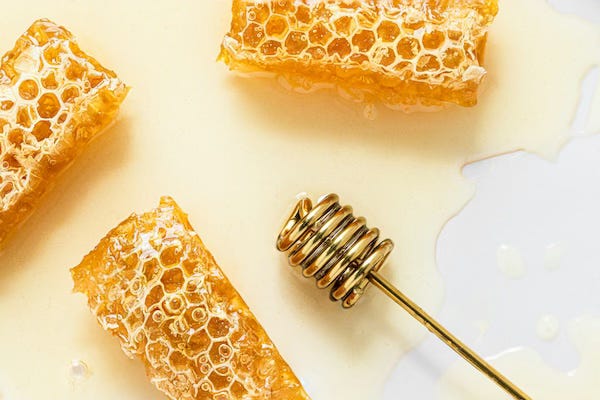
that I had a beehive
here inside my heart.
And the golden bees
were making white combs
and sweet honey
from my old failures.
Last night as I slept,
I dreamt—marvelous error!—
that it was God I had
here inside my heart.
The final “proof” that Proof was the right theme for April came on our daily pilgrimage to Trader Joe’s after that hike.
Making its debut in the new products section this week was a selection of de-alcoholized wines.
I’d tried one the day before with some success, and decided to grab a bottle of a Pinot Grigio from New Zealand.
Before scanning it, however, the clerk surprised me by asking for ID.
Asking someone several landmark college reunions beyond the legal drinking age of 21 seemed a bit overzealous in any situation — but especially for this particular purchase.
I responded, “I’m happy to show you my driver’s license, but this is non-alcoholic.”
“Well, I think it’s actually 3% alcohol,” the clerk replied, trying to read the very fine print on the bottle to gauge the proof.
I shrugged it off, only later examining the label with a microscope at home and discovering that it’s actually 0.5%, safely below the state’s legal limit.
This bizarre double dose of “proof” — requiring my ID for a beverage that is 99.5% grape juice — was the universe’s final confirmation that Proof — new meditation HERE — was indeed destined for this month.

Sadly — largely because it doesn’t exist — I won’t be able to get Broadway tickets to see September L. Davis in Proof: The Musical.
What I love about that — and about all these nudges from the universe — is the absurdity that seems to arise the moment you look for proof in any form.
ChatGPT forgets how to spell, and Trader Joe’s clerks start carding mature adults for beverages whose key feature is that they’re non-alcoholic.
Sometimes these mistakes can be quite humorous, even delightful.
Indeed, I love Machado’s repeated phrase “marvelous error!” — especially in the stanza about golden bees “making white combs and sweet honey from my old failures.”
The lesson is clear.
As Nero writes:
In life, we must often prepare for our blessings before we see physical proof.
This reframe — that all deep change is within, and that proof arrives less as a smoking gun than as an afterthought — really can change everything.

Ready to reinvent this spring?
Coaching info HERE.
I love the observation that manifestation is associated with internal change which ought not require external proof. As you shared, external proof can be really fun. Melissa